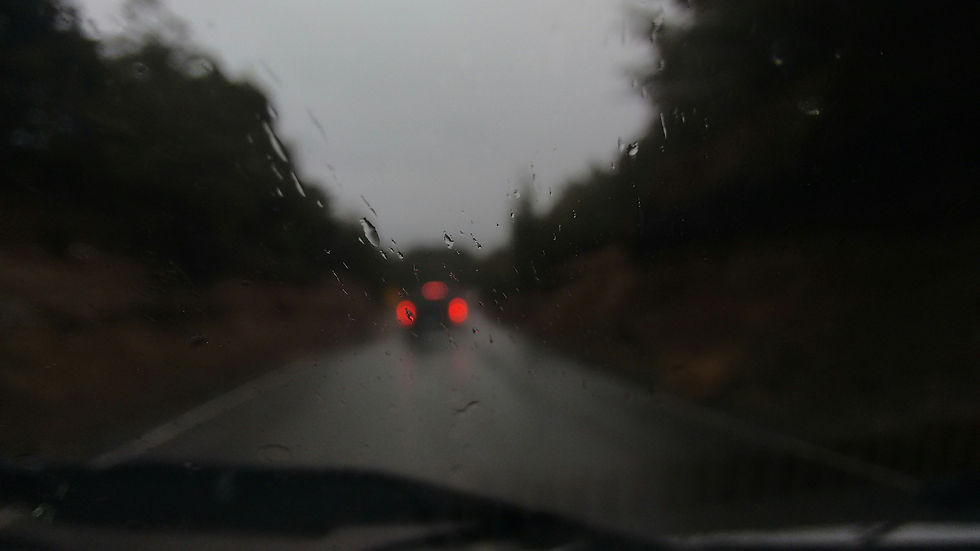
Guide to braking distances in the rain
Updated: Apr 10
It’s well known that the distance to stop your car increases when driving in the rain, but in practice, few people change their driving habits because it’s hard to visualise. Rain on the road lowers the grip of the tyres, meaning your car will travel further before the lower friction finally brings it to a stop. In almost all cases, the stopping distance is doubled in the rain.
At 70mph, the heavy rain stopping distance increases to almost 200m, or around 50 car lengths. This may seem easy to account for, but at that speed, missing your brakes by only a second could result in catastrophe. So how much slower should you drive in the rain? Decrease your speed by a third to account for the longer stopping distance. Meaning - 13mph instead of 20, 30mph instead of 50, and 45mph instead of 70.
When heavy rain pours down, it's important to understand the impact it can have on a car's stopping distance. In these treacherous conditions, the road becomes slick and waterlogged, resulting in reduced traction between tires and the pavement. This means that the heavy rain stopping distance of a vehicle becomes significantly extended, posing a grave danger to both the driver and surrounding traffic.
What Should I Do When Driving in The Rain?
Taking extra care when driving in the rain is key. Avoid sudden movements such as harsh braking or steering on wet roads. Doing so can cause your tyres to lose their grip on the road and you may begin aquaplaning. Aquaplaning is when water builds up and gets in between the tyre and the road, causing the car to slide freely, even at speeds of just 35mph.
When aquaplaning, you may notice your steering is less responsive and in the worst of cases, the rear of your car will begin to move out to the side. If this happens, ease off the acceleration to slow down, apply the brakes gently and keep the steering wheel straight. In heavy rain, make sure to turn on your fog lights so that other drivers can see you clearly and make sure to avoid you if you begin aquaplaning.
How Can I Prepare For Driving in the Rain?
There are a few checks you can quickly do before embarking across those flooded roads and rain-beaten motorways. Wipers are a good start. Check that the rubber isn’t damaged or missing. Then, check if they work – if they smudge the window or leave a scratch, they’ll need replacing. You will also need to double-check your tyres. See our previous blog for more details.
If you would like us to check that your car is ready for driving in the rain, just give us a call on 01202 148303 or email us at service@star-tech-ev.co.uk